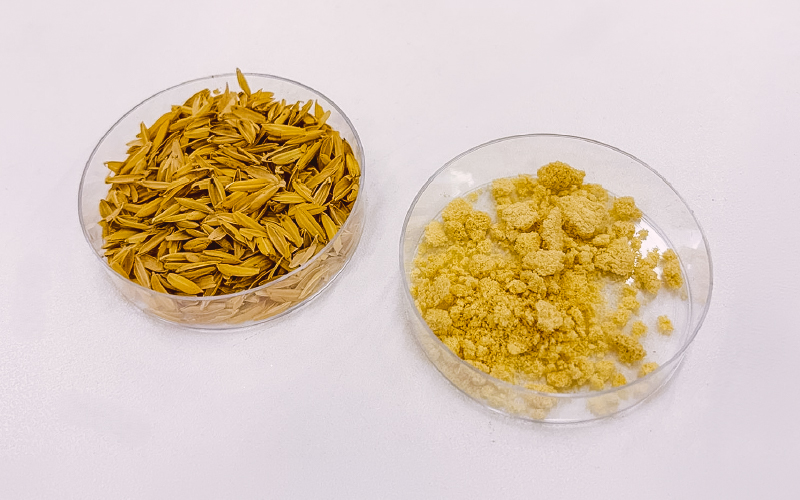
The BIOCOMPOSITE project, led by Componit and developed in partnership with the University of Coimbra, represents an innovative response to the sustainability challenges facing the materials industry, particularly in the automotive sector. The project focuses on the development of sustainable biocomposites, combining bio-based and biodegradable polyesters with natural fibres obtained from agro-industrial waste, thereby helping to reduce the environmental impact associated with conventional plastics.
According to João Pereira, the project lead, “BIOCOMPOSITE aims to develop new sustainable composite materials, based on renewable-source polyesters and reinforced with natural fibres derived from agro-industrial waste, capable of meeting the technical requirements of the automotive industry”. The researcher also highlights that this approach seeks not only to replace fossil-based materials, but also to add value to agricultural by-products, transforming them into resources of high technological value.
The project explores the potential of waste materials abundant in Portugal, such as maize husks, rice husks and olive pomace, from which cellulose fibres are extracted that can be used as reinforcement in the new composite materials. This strategy helps reduce waste and promotes a more efficient use of available resources, in line with the principles of the circular economy.
Initially, the work focuses on market assessment and identifying the most suitable biodegradable materials for the production of biocomposites. Among the polymers studied, PBAT, PBS and PLA stand out; these are biodegradable polyesters with promising mechanical and thermal properties for industrial applications. In parallel, laboratory research is underway to synthesise new, more hydrophilic bio-based polyesters capable of interacting more efficiently with natural fibres.
Another key focus of the project involves the creation of polyester-based compatibilisers, which improve the interaction between the polymer matrix and natural fibres. This step is essential to ensure that the resulting biocomposites exhibit good mechanical properties and structural stability, fundamental requirements for demanding applications such as automotive components.
According to João Pereira, close monitoring of the scientific work is essential to ensure the initiative’s success: “We continuously monitor the experimental development of the project, from the synthesis of the new polyesters to the production and characterisation of the biocomposites, ensuring that each stage contributes to achieving materials with performance suited to the demands of the automotive industry.”
The materials developed are then processed using techniques such as extrusion and injection moulding, enabling the production of test specimens and the evaluation of their thermal, mechanical and morphological properties. Preliminary results indicate that the incorporation of natural fibres can increase the stiffness of the composites, contributing to the development of lightweight and strong materials suitable for various vehicle components.
“This project receives financial support from COMPETE 2030, which plays a key role in bringing this initiative to fruition. By funding BIOCOMPOSITE, COMPETE 2030 not only enables the development and validation of new sustainable biocomposites, but also accelerates research and knowledge transfer between industry and academia. This support helps to drive technological innovation and promote the recovery of agro-industrial waste, reinforcing the commitment to the circular economy and the development of more sustainable materials for industrial applications,” emphasises João Pereira.
From a strategic perspective, BIOCOMPOSITE represents an important step towards the transition to more sustainable materials in industry. By bringing together scientific research, the recovery of agro-industrial waste and technological development, the project creates new opportunities to reduce dependence on fossil resources and promote innovative solutions with a smaller environmental footprint.
Thanks to this joint effort between academia and industry, it is hoped that the biocomposites developed will, in the future, be able to replace conventional materials in automotive applications, contributing to lighter, more sustainable vehicles that are in line with current environmental requirements.